Have you ever wondered how industrial dryers achieve such precise and uniform drying? A Fluid Bed Dryer is the answer. This powerful machine utilizes the principle of fluidization to dry materials quickly and evenly.
In this article, we will explore how a Fluid Bed Dryer works, its key components, and the benefits it offers. You will also learn about its diverse applications across industries like pharmaceuticals, food processing, and chemicals.
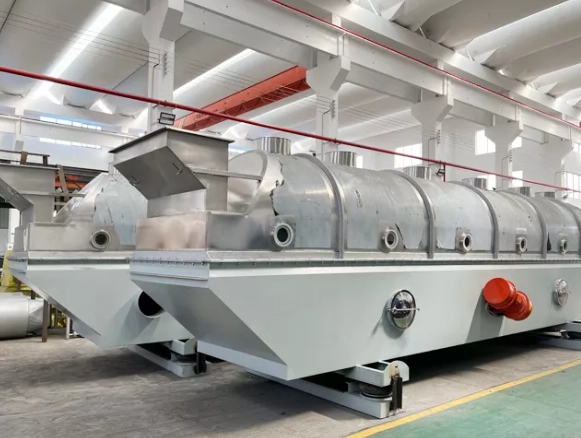
Fluidization is the core principle of how a Fluid Bed Dryer works. The process begins when hot air is passed upwards through a perforated plate. The air velocity is carefully controlled to lift the particles, causing them to behave like a fluid. This creates a fluidized bed, where particles move freely and are uniformly exposed to the heat. This suspension process ensures efficient moisture removal, as each particle is consistently exposed to the drying air.
The key to successful fluidization lies in balancing the air velocity with the particle size. If the air velocity is too low, particles will remain stagnant, preventing effective drying. Conversely, if the air velocity is too high, particles may be blown out of the dryer. Achieving the right balance is crucial for optimal drying performance.
During the fluidization process, the solid particles are suspended and agitated in the air stream. This not only increases heat transfer efficiency but also helps to maintain uniformity in drying. The key to efficient fluidization is the balance between air velocity and particle size. Too high an air velocity can lead to particle loss, while too low can result in insufficient fluidization. Maintaining proper airflow is critical for ensuring uniform drying and preventing clumping of particles.
As particles become suspended in the air, they form a uniform layer, allowing heat to be distributed evenly. This dynamic behavior significantly reduces drying time and improves the consistency of the final product. Additionally, controlling airflow can prevent issues such as material caking or uneven drying, ensuring high-quality output.
A Fluid Bed Dryer consists of several key components that work in tandem to ensure efficient drying:
| Component | Description |
|---|---|
| Wind Box | Distributes air evenly into the material bed to ensure uniform fluidization. |
| Perforated Plate | Suspends particles in the airflow, enabling fluidization. |
| Heating Unit | Supplies hot air required for drying, with temperature regulation. |
| Control System | Monitors and adjusts temperature, air speed, and humidity for precise drying. |
Each of these components plays a vital role in achieving the desired drying outcome and maintaining the system's efficiency.
Fluid Bed Dryers start with low air velocity. As the air speed increases, the particles gradually start to float. This is the point of minimum fluidization. Once the particles are fully suspended, the air velocity is maintained to ensure they stay in the fluidized state throughout the drying process. This initial phase is critical for establishing a stable fluidized bed, which ensures that the particles are uniformly exposed to the drying air.
Throughout the process, the air velocity is finely tuned to maintain the fluidized state, preventing particles from settling or moving too rapidly. The ability to adjust the airflow provides greater control over the drying process, resulting in more consistent moisture removal.
Heat is transferred from the hot air to the particles via convection. The heat causes the moisture in the particles to evaporate, which is then carried away by the exhaust air. The rate of moisture removal is determined by the temperature and airflow, ensuring rapid and efficient drying. This efficient heat transfer is one of the main reasons why Fluid Bed Dryers are much faster than traditional drying methods.
The drying air is carefully monitored to ensure that it is not too hot, which could damage the material, or too cool, which would prolong the drying process. The system is designed to provide just the right amount of heat for optimal drying conditions, ensuring that the moisture is removed effectively while preserving the integrity of the material.
To prevent clumping and ensure even drying, Fluid Bed Dryers use continuous agitation. The air flow and the vibration of the bed prevent the material from settling, ensuring each particle is exposed to the drying air. This feature makes Fluid Bed Dryers more effective than traditional dryers that may suffer from uneven drying or heat spots. Agitation is especially important when drying sticky materials that tend to clump together.
The agitation provided by the air and mechanical vibrations ensures that no part of the material is neglected during the drying process. This not only accelerates drying time but also contributes to a higher-quality end product.
Batch Fluid Bed Dryers handle a set quantity of material per cycle. They are ideal for small-scale or pilot production, allowing for greater flexibility in processing different materials. Batch systems are also well-suited for environments where the products vary frequently, and precise control is needed for each batch.
Continuous Fluid Bed Dryers process materials continuously, making them suitable for large-scale industrial operations. The material moves through the dryer without stopping, ensuring a constant output. Continuous systems are designed for high throughput and can accommodate large volumes of material, making them ideal for high-capacity production lines.
Both types have their advantages, and the choice depends largely on the production scale and requirements of the application.Here's a quick comparison between the two:
| Feature | Batch Fluid Bed Dryer | Continuous Fluid Bed Dryer |
|---|---|---|
| Production Type | Processes a set quantity per cycle | Processes material continuously |
| Scale of Operation | Ideal for small-scale or pilot production | Suitable for large-scale industrial operations |
| Flexibility | More flexible for varying materials and batches | Designed for high throughput with constant output |
| Efficiency | Less efficient for large volumes | More efficient for large-scale, consistent output |
In certain applications, vibration is added to the fluidization process. Vibratory Fluid Bed Dryers use mechanical shaking to help fluidize the material, especially for sticky or wet substances that are harder to dry with standard air flow alone. This added agitation helps to break up clumps, ensuring that even the most challenging materials can be processed efficiently.
Choosing the right type of Fluid Bed Dryer depends on the material being processed, production scale, and specific requirements such as moisture content and temperature sensitivity. Vibratory systems are particularly useful for drying materials that tend to stick together or clump when subjected to air alone.
Spouted Bed Dryers are used for drying large, dense particles such as seeds or plastics. These dryers feature a central spout that helps to lift and fluidize heavier particles.
Wurster Coaters combine drying and coating, often used in pharmaceutical industries for controlled drug release. These systems allow for the application of coating layers while the material is simultaneously dried.
Multi-Stage Fluid Bed Dryers enhance drying efficiency by using multiple zones, each with different temperature or air velocity settings. This design allows for more precise control over the drying process, particularly when working with materials that require different drying stages.
Fluid Bed Dryers use less energy than older drying technologies like rotary or tray dryers. By optimizing airflow and heat transfer, they reduce energy consumption while maintaining fast drying times. The closed-loop air recycling system further minimizes energy waste, making Fluid Bed Dryers an environmentally friendly option for industrial drying.
Unlike other dryers that may overheat sensitive materials, Fluid Bed Dryers allow precise control over temperature and airflow, making them ideal for products like pharmaceuticals, food powders, and specialty chemicals. This ensures that delicate compounds are protected from thermal degradation, preserving their integrity and effectiveness.
The fluidization process ensures that every particle in the dryer receives uniform exposure to heat, resulting in consistent drying. The drying process is highly controllable, allowing operators to fine-tune the system for optimal results. This is particularly important when processing materials with specific moisture requirements. Consistent moisture control is crucial for maintaining the quality of products, especially in the pharmaceutical and food industries.
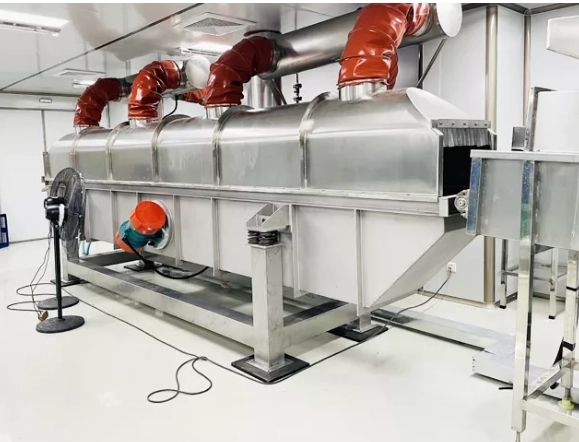
In the pharmaceutical industry, Fluid Bed Dryers are used to dry granules and powders. They ensure uniform moisture content in the final product, such as tablets and capsules, which require precise moisture levels for efficacy and stability. The controlled environment provided by Fluid Bed Dryers ensures that these critical products maintain their quality throughout the drying process.
In food manufacturing, Fluid Bed Dryers are used to dry milk powder, coffee, and herbs. They maintain the nutritional value and flavor of the products while extending shelf life by reducing moisture content and preventing microbial growth. The ability to maintain uniform drying without overheating is essential in preserving the natural characteristics of food products.
In the chemical and fertilizer industries, Fluid Bed Dryers are used to dry substances like polymer resins, catalysts, and fertilizer granules. The controlled drying process ensures that these materials retain their quality and are safe to handle. These dryers also offer the advantage of higher processing speeds, which is essential for the high-volume demands of the chemical and fertilizer industries.
Particle size, density, and moisture content are critical when selecting a Fluid Bed Dryer. The airflow must be adjusted to match the material’s characteristics to achieve optimal fluidization. Materials that are too large or small may require additional modifications to the system to ensure proper drying.
For small-scale or pilot production, a batch Fluid Bed Dryer may be suitable. For large-scale production, a continuous system is more efficient, providing a consistent and high throughput. This distinction is crucial when determining the appropriate system for your production line, as it can significantly impact your overall production capacity.
Heat recovery systems can significantly reduce operational costs by reusing hot air within the system. Choosing between electric or gas heating also impacts energy consumption, and businesses should assess the most cost-effective option. Understanding the material properties and production scale is key to selecting the right Fluid Bed Dryer that meets both efficiency and budgetary requirements.
Fluid Bed Dryers are essential for industries where precise moisture control, uniform drying, and energy efficiency are critical. Their versatility makes them ideal for drying heat-sensitive substances and large industrial batches. With proper selection, businesses can improve efficiency, reduce energy consumption, and ensure high product quality.
For companies like Nanjing Sinonine Heavy Industry Science and Technology Co., Ltd., their Fluid Bed Dryers are designed to meet diverse industrial needs, offering advanced solutions that enhance production processes and optimize drying performance.
A: A Fluid Bed Dryer is an industrial machine used to dry solid materials by suspending them in a stream of hot air. This ensures uniform drying and efficient moisture removal, making it ideal for materials like powders and granules.
A: A Fluid Bed Dryer works by passing hot air through a bed of material, creating a fluidized state where particles move freely. The heat evaporates moisture, ensuring consistent drying.
A: Fluid Bed Dryers offer high energy efficiency, uniform drying, and precise control over temperature and moisture content, making them ideal for heat-sensitive materials.
A: Fluid Bed Dryers provide faster drying, energy savings, and better control compared to traditional methods, especially for materials requiring uniform heat distribution.
A: Fluid Bed Dryers use optimized airflow and closed-loop air recycling, minimizing energy loss while maintaining efficient heat transfer.
A: While Fluid Bed Dryers are highly versatile, they are best suited for free-flowing, granular materials. Adjustments can be made for sticky or dense materials with additional features.
Pre: How Does A Ball Mill Work?
Next: What Is A Jaw Crusher?