Why do so many industries rely on a ball mill for material grinding? This machine quietly supports countless production lines every day. In this article, you will learn what a ball mill is, how it works, and why it plays such an important role in modern processing.
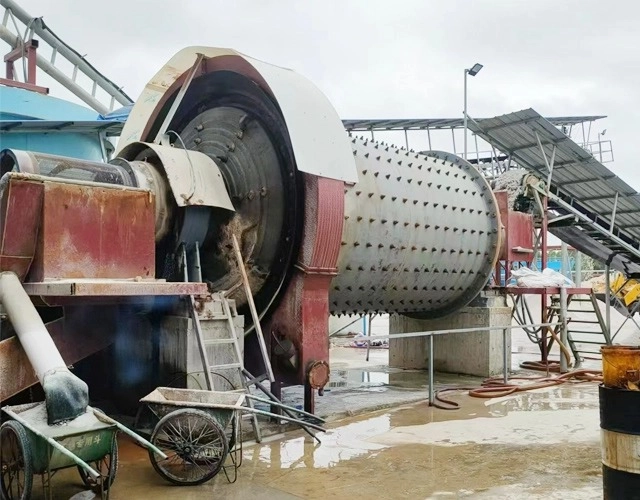
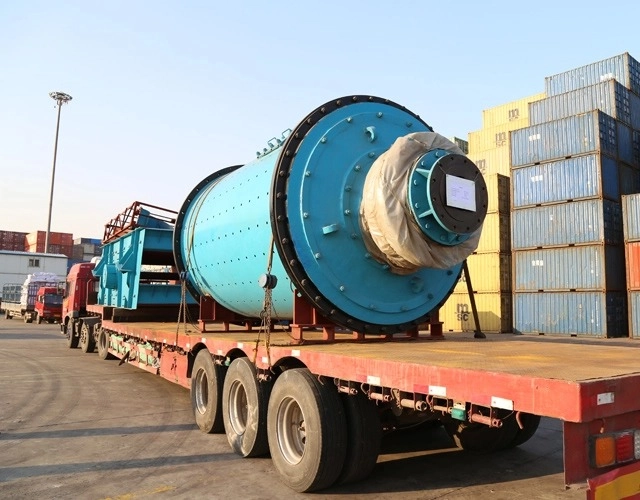
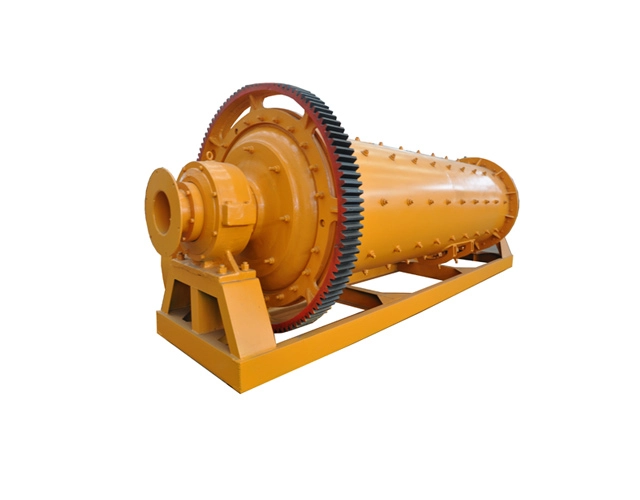
A ball mill is a grinding machine used to reduce solid materials into fine powder or small, uniform particles. It works by rotating a cylindrical shell filled with grinding media and material. As the shell turns, the media moves with it, then falls and rolls, breaking material down through repeated contact.
This simple motion allows a ball mill to handle many material types without complex control systems, which is why it remains widely used across processing industries.A ball mill matters because it provides predictable size reduction. It does not rely on sharp cutting or fragile components. Instead, it uses controlled movement and mass. That makes it suitable for continuous production lines where stable output size supports later processes such as separation, mixing, or chemical treatment.
Ball mills are central to size reduction because they balance efficiency and consistency. They grind gradually rather than aggressively, helping materials reach target fineness without sudden variation. Many industrial systems depend on this steady behavior to keep overall production stable.
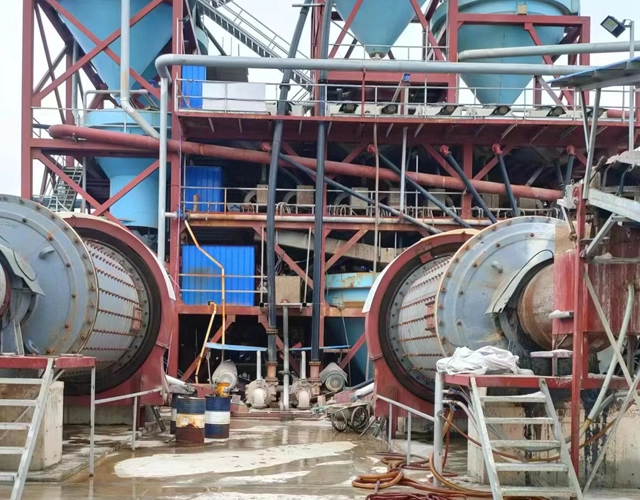
A ball mill is built around a cylindrical shell, which forms the main grinding chamber. This shell rotates around a horizontal axis and carries both material and grinding media. Its thickness and strength determine how well the mill handles long-term mechanical stress.
Inside the shell, liners protect the surface and guide media movement, while also influencing grinding efficiency. Grinding media sits inside the shell and performs the actual size reduction. These media elements move as the shell rotates, creating impact and friction against the material. The discharge system controls how ground material exits the mill, ensuring particles reach the next stage at the right size.
Component | Primary Function | Why It Matters in Operation |
Cylindrical shell | Holds material and media | Maintains structural stability |
Grinding media | Performs grinding action | Controls fineness and efficiency |
Liners | Protect inner shell | Extends service life |
Discharge system | Releases ground material | Stabilizes output flow |
In practical use, these parts work as a single system. When one element is matched well to the application, the entire ball mill operates smoothly. That integrated design explains why ball mills continue to serve as a core grinding solution in many processing plants.
Impact grinding is the first force at work inside a ball mill. As the cylindrical shell rotates, grinding media lift upward along the inner wall, then fall under gravity. Each fall creates a direct удар effect on larger particles. Over thousands of rotations, repeated impacts gradually reduce material size in a controlled way. Key characteristics of impact grinding include:
● Media rises and drops in a predictable cycle during rotation
● Larger particles break first under direct collision
● Energy transfers through mass and height, not sharp cutting
● Stable rotation speed keeps impact strength consistent over time
This process feels reliable. It handles uneven feed size well and avoids sudden changes in output quality during continuous operation.
After impact breaks material down, attrition grinding takes over. Balls roll, slide, and press against each other, trapping particles between them. Friction and shear forces slowly wear particles down, refining them further. This stage is essential for reaching uniform fineness. Attrition grinding contributes by:
● Smoothing particle edges after impact breakage
● Reducing size differences between coarse and fine particles
● Improving consistency for downstream processes
● Supporting stable powder or slurry behavior
Many users value attrition because it improves particle uniformity without aggressive force. It helps the ball mill deliver predictable results even during long production runs.
A ball mill’s performance depends on several adjustable parameters. These factors work together, not in isolation. Operators usually tune them as a group to match material behavior and target fineness. Important operating parameters include:
● Ball size: larger balls support strong impact, smaller balls favor fine attrition
● Media loading: affects how often balls contact material
● Mill speed: controls lifting height and movement pattern
● Material feed rate: influences residence time inside the mill
Balanced settings keep grinding stable and energy transfer efficient across different operating conditions.
Operating Parameter | Main Role | Effect on Grinding Behavior |
Ball size | Controls force type | Impact vs fine refinement |
Media load | Controls contact level | Grinding intensity |
Mill speed | Controls motion pattern | Energy transfer stability |
A ball mill can run in wet or dry mode, depending on process requirements. Both modes use the same grinding principles, but material flow changes how grinding energy is applied and how product exits the mill.
Wet ball mill operation typically involves:
● Liquid-assisted material movement
● Reduced dust during grinding
● Smooth discharge of fine particles
● Common use in mineral and slurry systems
Dry ball mill operation focuses on:
● Air-assisted powder movement
● Clean handling of dry materials
● Compatibility with powder-based processes
● Flexible integration into dry production lines
Working Mode | Material Form | Typical Application Focus |
Wet ball mill | Slurry or suspension | Mineral and process systems |
Dry ball mill | Dry powder | Chemical and material preparation |
In mineral processing, a ball mill plays a central role in turning raw ore into a usable form. It reduces mined material into smaller particles so separation steps work properly. When particle size stays uneven, recovery drops. That’s why many processing plants rely on ball mills for steady, repeatable grinding. Common mineral-related uses include:
● Grinding ores to release valuable minerals from waste material
● Producing uniform feed size for flotation systems
● Preparing material for leaching processes where surface area matters
● Supporting stable flow into classifiers and separators
From an operator’s view, the ball mill acts as a conditioning stage. It does not just reduce size. It prepares material so downstream processes run smoothly and predictably.
Mineral Processing Stage | Role of the Ball Mill | Why It Matters |
Primary grinding | Size reduction | Enables mineral liberation |
Pre-flotation feed | Particle conditioning | Improves separation efficiency |
Pre-leaching preparation | Surface exposure | Supports chemical reactions |
Beyond mining, a ball mill fits naturally into many industrial manufacturing lines. It handles both grinding and mixing in one enclosed system. That flexibility makes it useful where consistency matters more than speed alone. Typical manufacturing uses include:
● Grinding ceramic raw materials into fine, workable powders
● Processing chemical compounds to controlled particle sizes
● Preparing building materials where uniform texture improves strength
● Mixing and blending materials during the grinding process
Manufacturers often value how a ball mill combines size reduction and blending. It simplifies equipment layout and keeps material behavior stable during long production cycles.
In research and laboratory settings, a ball mill supports precision and control rather than volume. It allows researchers to test material behavior under repeatable conditions. Small changes in settings produce measurable differences, which helps during development work.
Laboratory-focused applications include:
● Preparing samples for physical and chemical testing
● Grinding small batches for material comparison
● Producing controlled particle sizes for experiments
● Supporting repeatable trials across multiple test runs
In these environments, the ball mill becomes a research tool. It helps teams understand materials before scaling them into full production systems.
Discharge design shapes how a ball mill releases ground material and how stable output stays during operation. Two common designs appear in real production lines, each supporting different material behaviors and flow needs. Key discharge options include:
● Overflow ball mill: material exits naturally once it reaches the discharge level, which helps maintain steady grinding conditions and smoother particle flow
● Grate discharge ball mill: material passes through a structured grate, allowing faster discharge and higher throughput for specific applications
Discharge Type | Material Flow Style | Typical Output Behavior |
Overflow ball mill | Natural overflow | Stable, uniform discharge |
Grate discharge ball mill | Controlled opening | Faster throughput |
A ball mill can be built for very different scales of work. Size and capacity determine how much material it handles and how it fits into a production system. Smaller mills focus on control and precision, while larger units support continuous, high-volume output. Common size-based classifications include:
● Laboratory ball mill for testing, trials, and material research
● Pilot-scale ball mill for process validation and scaling decisions
● Industrial ball mill for continuous production environments
Capacity should match production flow. Oversized mills waste energy, while undersized mills limit output. Many manufacturers, including Sinonine, offer configurable options so capacity aligns smoothly with real operating goals.
Ball Mill Size | Typical Capacity Range | Primary Use |
Laboratory | Small batches | Testing and research |
Pilot scale | Medium batches | Process validation |
Industrial | Large continuous flow | Full-scale production |
Choosing the right ball mill begins by understanding how materials behave in real production. Different materials respond differently to impact and attrition, so selection never depends on size alone. Operators usually look at several practical factors together to avoid mismatch later.
Key considerations often include:
● Material hardness, abrasiveness, and moisture level
● Target particle size and how tight the distribution must be
● Throughput goals tied to hourly or daily output
Beyond technical parameters, production fit matters. Operating mode, wet or dry, affects material flow and system layout. Long-term goals such as stable output and smooth integration into existing lines also guide decisions. A ball mill should feel balanced, not oversized or limiting.
This is where Sinonine supports customers. Drawing on strong engineering experience and EPC services, Sinonine designs ball mill solutions around the full production line. Their approach helps users meet current needs while keeping flexibility for future capacity growth.
This article explains what a ball mill is, how it works, and where it is used across industries. It shows how impact and attrition support steady grinding results. It also outlines common types and selection logic. Sinonine provides ball mill solutions designed for stable output, flexible operation, and long-term industrial value.
A: A ball mill is a grinding machine used to reduce materials into fine particles through impact and attrition. It is widely used because it delivers stable particle size, handles many materials, and fits continuous production systems.
A: A ball mill works by rotating a cylindrical shell filled with grinding media. As it turns, the media rises and falls, creating impact and friction that gradually reduce material size in a controlled way.
A: A ball mill can process ores, minerals, ceramics, chemicals, and building materials. Its flexible grinding action allows it to handle both hard and soft materials across many industries.
A: Ball mill performance depends on media size, mill speed, material properties, and operating mode. Adjusting these factors helps achieve the desired particle size and stable throughput.
A: Choosing a ball mill involves matching material behavior, target fineness, and production capacity. A well-matched ball mill integrates smoothly into the process and supports long-term operating goals.